Mandalas
The mandala is a visual expression of the inherent unity and integrity of the universe, and the inter-relatedness of all of its parts.
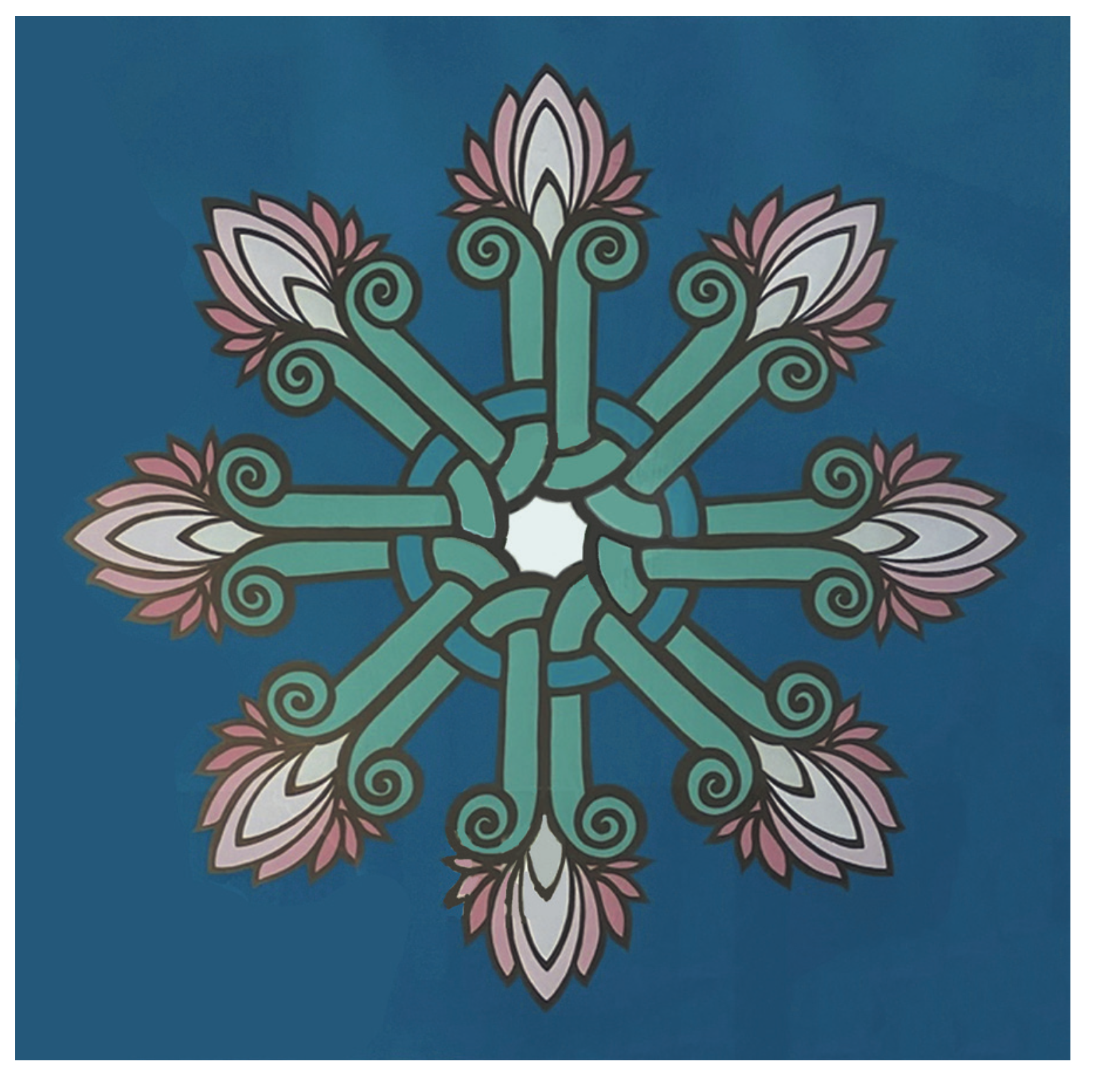
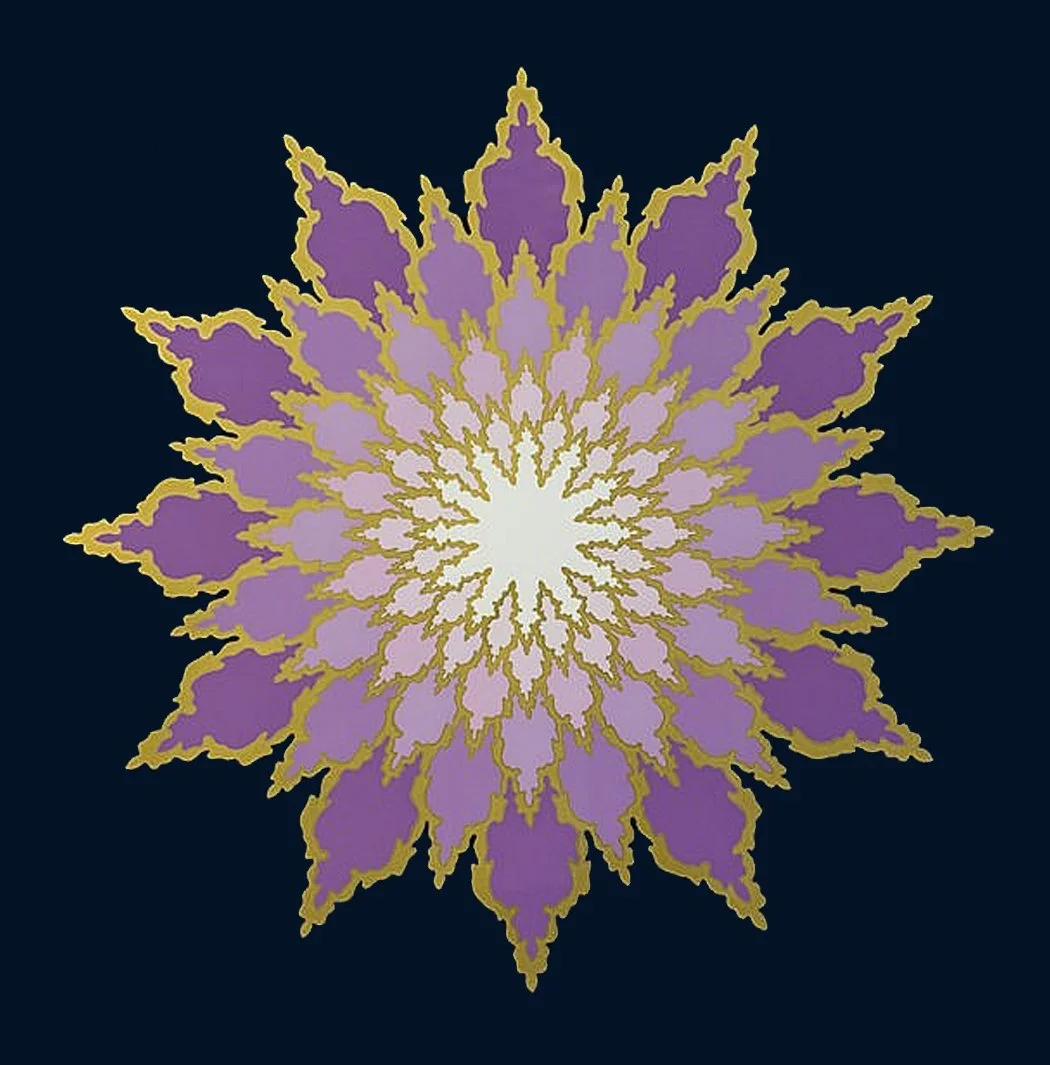
Of the few mythological themes shared by all cultures, perhaps the most universal and enduring resides in the deepest heart of Man, the remembrance of the Paradise which was his original home. The great catastrophe, the fall from grace, and the desire for a return to that blissful point of origin have for millennia characterized the most significant observances, encouraging us to recapture the harmony and perfection of our beginning.
The timeless origin myth has found eloquent visual expression in the mandala. A Sanskrit word meaning “circle,” the mandala is an integral symbol appearing in the sacred iconography of cultures as diverse as the Judeo-Christian — in the Seal of Solomon and the rose windows of the gothic cathedrals, in the healing sand paintings of the Native American Indian, in the temples of the Buddhist and Hindu East, and in the deeply spiritual iconography of the Aboriginal Australian, whose cultural roots reach into pre-history. In the twentieth century, it was the research of Swiss psychiatrist Dr. Carl Jung which revealed the invaluable role played by the mandala in the “individuation of the self,” a centering process through which the shattered psyche is restored to wholeness and health.
Our world mythologies will prove to be the invaluable guide they have been for millennia past in our renewed quest for self-discovery and mutual understanding. The Garden within will illuminate our re-cognition if the Paradise of our own environment.
Geoffrey Graham